When the Walls Do Some of the Work: Assistive Technology Hidden in Plain Sight
Opening a door, switching on a light, adjusting the blinds. These small actions happen dozens of times a day, usually without thought. For people living with significant disability, each one may depend on someone else being available to help.
Assistive technology built into Specialist Disability Accommodation (SDA) can change that, often in ways visitors barely notice.
Technology That Blends In
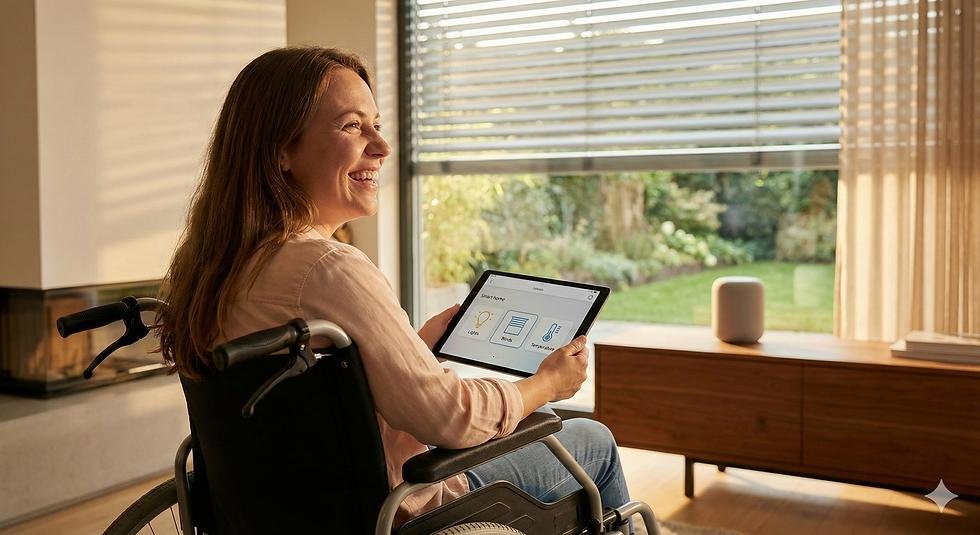
Good assistive technology rarely looks like medical equipment. It sits behind wall panels, inside door frames and within ceiling spaces. A door opens with the press of a button or a voice command. Lights adjust from a tablet beside the bed. Blinds lower when the afternoon sun becomes too strong.
Because these systems are integrated into the building, the home still looks and feels like a home rather than a clinical setting. Residents and guests may never realise how much of the home responds to a simple touch or spoken instruction.
Common Features in SDA Homes
The features available vary by property and design category. In many SDA homes, residents may find automated doors and windows, home automation systems that control lighting and climate, and intercoms that let them see and speak with visitors before opening the front door.
Higher-support homes often include provision for ceiling hoists, which help with transfers between bed, chair and bathroom. Emergency call systems allow residents to contact support staff when they need help, including overnight.
Independence Without Constant Assistance
The real value of these systems lies in what they make possible. A resident who can open their own front door decides when to receive visitors. Someone who controls the temperature and lighting can stay comfortable without asking for help each time conditions change.
This kind of independence can also support a more balanced relationship with support workers, whose time can focus on care and companionship rather than small repetitive tasks.
Planning for Individual Needs
No two residents use technology in quite the same way. Some prefer physical switches placed at an accessible height. Others rely on voice control, switches mounted on a wheelchair or apps on a smartphone. The best systems allow for this variety and can be adjusted as needs change.
When considering a property, ask how the technology is controlled, whether it can be adapted and what happens during a power outage. Reliable backup arrangements are especially important for residents who depend on powered equipment.
Searching for the Right Home
Anyone looking for SDA accommodation Sydney and beyond should ask providers to demonstrate the technology during an inspection. Seeing how a door opener responds, or how lighting is controlled from different parts of the home, gives a clearer sense of daily life than a written list of features.
It is also worth asking who maintains the systems and how quickly repairs are handled, since dependable technology is only as good as its upkeep.
A Home That Helps Without Fuss
When assistive technology works well, people stop noticing it. The door opens, the lights turn on, and the resident gets on with their day. That quiet reliability is what makes it so valuable.