Can a Drug Lawyer Challenge an Unlawful Search or Seizure?
Can a Drug Lawyer Challenge an Unlawful Search or Seizure?
A drug arrest may take seconds, but the legal troubles might last months. Police may search your car or residence or things of yours when under investigation. But what if they are breaking the law to do so? You have rights under the Constitution. The police must have probable cause to search people or property. If an officer crosses that boundary, a drug lawyer will be able to contest a search. An illegal search might impact the entire criminal case. Sometimes this means that the court will exclude critical pieces of evidence during trial. Making it more difficult to support their case by the prosecution.
What Makes a Search for Drugs Illegal?
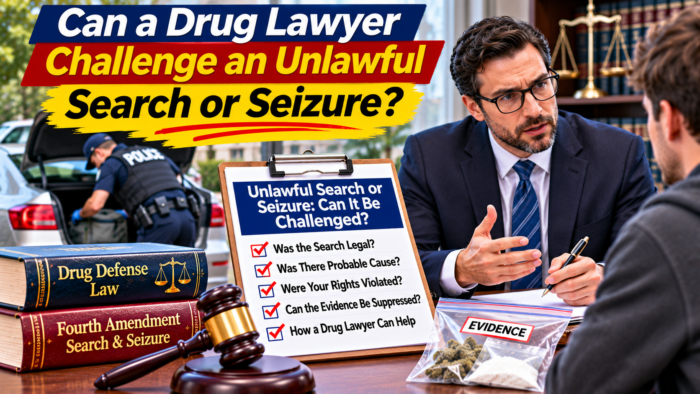
The Fourth Amendment protects against unreasonable searches and seizures. It restricts police behavior when searching residences, vehicles, and personal property. Police normally require a proper search warrant to access a private house. But the legislation has several exceptions. These rules are based on the facts of the case. When a search raises legal issues:
- An officer searches without a proper warrant or other legal exception.
- Police exceed the limitations of a search warrant.
- Police get consent by coercion or force.
- Police search cars without legal basis.
- Officers fail to adhere to the “rules” guarding an individual’s rights.
All police mistakes do not involve an illegal search. Once you’ve had a lawyer analyze the facts and law, you must challenge the evidence.
But may the police search your car without a search warrant?
Yes, but only in specific situations. The police have some limited leeway in searching autos without a warrant per the law. For instance, police may examine an automobile if they have probable cause. That’s a reasonable suspicion that there is proof of a crime in the car. Police can also search under some restrictions regarding permission. So if you consent to the search, then the officers can use that consent. However, consent must be voluntary. The police can not offer illegal threats, such as promises of leniency, to get consent. A drug attorney can go to the traffic stop and search. The lawyer can determine if the authorities had a legal basis for searching the car.
What If Police Search Your Home Without Consent?
Your house has substantial protection under the Fourth Amendment. Police often need a warrant to enter your private home. A good warrant should comply with the law. It must specify where the cops will search and what they are searching for. There are a number of exceptions to this rule. In some emergencies the police can enter without a warrant. They may also enter with a person’s legitimate permission. For example, police officers may enter a residence if they have a reasonable belief that someone inside it is in urgent danger. They also can act to prevent destruction of evidence, within legal limits. If the police searched outside the scope of the law, your attorney may have a way to dispute the police. This may help to suppress evidence discovered during the search.
What Can a Drug Lawyer Do to Fight an Illegal Search?
A drug lawyer will go beyond the arrest report. The attorney considers how the cops found the narcotics and collected the evidence. There are a few things the defense can do.
1. Examine the Search Warrant
Your lawyer will check whether the warrant was legitimate and properly executed. Any substantial legal deficiency is subject to challenge.
2. Review Police Reports
Police reports can disclose inconsistencies or contradictions in the officers’ testimony. A lawyer will cross-reference the reports with video, pictures, and witness accounts.
3. Review Body Cam Footage
Body camera footage will reveal what happened during the search. It can also show whether the cops followed correct procedure.
4. Attack the Probable Cause
That lawyer questions whether enough facts justified the police search. Bad reasons can be fought.
5. Motion to Suppress Evidence
A lawyer may request that the court disregard evidence because it resulted from an illegal search. This is termed a move to suppress.
What Is a Motion to Suppress the Evidence?
Motion to suppress: A request to a judge to bar evidence from being presented in court. In this motion, the defense contends that the police illegally got the evidence. For instance, they may break into a residence and search about without a legitimate search warrant or loophole in the law. They might locate drugs in a bedroom. Then, the defense may ask the judge to exclude certain medications from evidence. The judge hears arguments from the parties and applies the facts and law. If the judge allows the request, then the prosecution may not be able to use important evidence in the case. This can delay a case or prevent prosecutors from ever obtaining a case. But a suppression doesn’t necessarily end a criminal case. The prosecutor may have more evidence to back up the charges.
Can an Illegal Search Result in Dismissal of Drug Charges?
Yes, an illegal search can have an impact on a narcotics prosecution. It is contingent upon how important the suppressed evidence is. If the drugs are the primary evidence, then suppression may leave prosecutors with little to work with. They may drop the charges or work out some other solution. Search violations do not always result in dismissal of the case in court. There could be other evidence that would aid the prosecution. The attorney will need to see the whole case before he or she can tell you what the likely outcome is. No attorney can promise a dismissal or outcome.
Why Platinum Criminal Defense Law Firm
A drug charge puts you in a stressful place, perhaps full of questions and fear. What you need is sound guidance and a solid defense. However, David Benowitz of Platinum Criminal Defense Law Firm has handled several criminal defense cases. Mr. Benowitz aims to provide his clients with quality legal services at reasonable rates. He is rated AV from Martindale-Hubbell and AVVO 10. He also belongs to the National College of DUI Defense. He is also a Harvard Law School Trial Advocacy Workshop Faculty Member. A good criminal defense attorney will question police procedure and evidence obtained via illegal search. Early on, an attorney can also defend your rights during questioning and in court.
Commonly Asked Questions
- Can a drug lawyer fight an illegal police search?
Short answer: yes. Illegal searches might be challenged by drug lawyers.
Long answer: The lawyer examines the warrant and police records and the circumstances of the search. If the police officers broke the law, the defense might ask the judge to suppress the evidence. This can make the prosecution’s case weaker.
- What if the Police Find Drugs During an Illegal Search?
Short answer: Seizures can be suppressed by the court during an illegal search.
Long answer: A lawyer can file a motion to suppress the narcotics it seized. A judge will decide if the cops violated the Fourth Amendment. If the request is granted, the prosecution normally cannot utilize that evidence in their case.
- Can police seize my property without a warrant?
Short answer: Police generally need a warrant except in exceptional cases.
Long answer: The exceptions could include legal consent, an emergency, or another urgent situation. Police must meet the legal requirements of the stated exception. A lawyer can contest the legality of a search and enter.
- Does an illegal search indicate my drug charges will be dismissed?
Short answer: Not necessarily. An illegal search does not usually result in dismissal.
Long answer: The court can exclude evidence from the search. If such evidence was key to the case, prosecutors may have a difficult time obtaining the charges. Others may proceed with other actual proof.
- When do I need a drug defense lawyer?
Short answer: That you should call a lawyer immediately if you are searched or arrested for drugs.
Long answer: Having a lawyer early on provides him or her time to analyze police records and preserve potentially helpful evidence. Your lawyer can also ensure you know your rights and potential choices in your defense before critical court dates.